
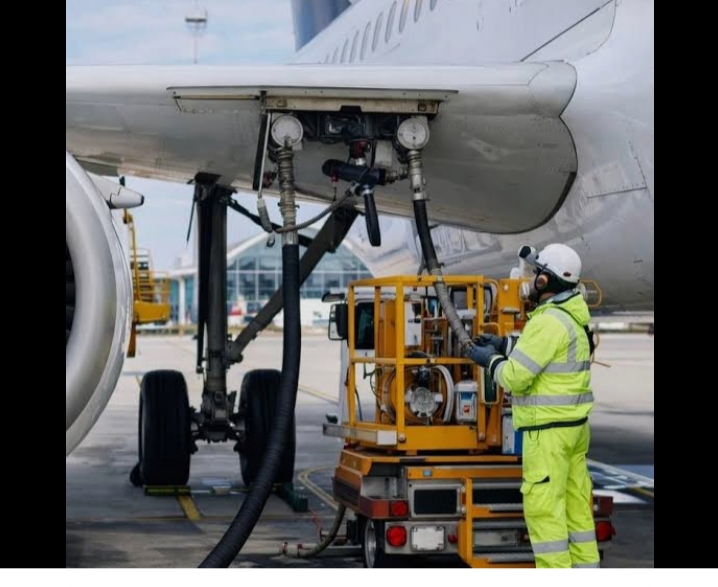
As aviation fuel, popularly known as Jet A1 shortage and crisis persists, the National Association of Aircraft Pilots and Engineers (NAAPE), has warned that the supply disruptions now pose serious risks to flight safety, airline sustainability, and workforce stability across the country’s aviation industry.
The union, which represents licensed pilots and aeronautical engineers, said the persistent scarcity of aviation fuel has triggered widespread operational disruptions, including flight delays, extended crew duty periods, and route adjustments by airlines already struggling with rising operating costs.
In a statement issued in Abuja on Sunday, NAAPE president, Captain Bunmi Gindeh described the situation as a matter requiring urgent national intervention, warning that fatigue among flight crew members could erode critical safety margins within the system.
Gindeh urged the federal government, the Nigerian Civil Aviation Authority (NCAA), the Nigerian Midstream and Downstream Petroleum Regulatory Authority (NMDPRA), and fuel suppliers to treat the Jet A1 shortage as a matter of urgent national priority.
According to him, “The persistent disruptions to flight schedules occasioned by the Jet A1 supply shortfall have resulted in significant extensions of crew duty time beyond planned parameters. Fatigue impairs cognitive function, slows reaction time, and, most dangerously, erodes situational awareness.
“We hereby call on the federal government, the Nigerian Civil Aviation Authority , the Nigerian Midstream and Downstream Petroleum Regulatory Authority, fuel suppliers, and all relevant stakeholders to treat the resolution of this Jet A1 supply crisis as a matter of urgent national priority.”
He further stated that within commercial aviation globally, fatigue management remains a major safety priority as industry regulators and operators typically maintain strict duty time limitations for pilots and technical personnel because prolonged work cycles can impair judgement, communication, and emergency response capacity during flight operations.
The union also warned that the economic effects of the crisis are beginning to ripple through airline operations and staff welfare systems.
According to Captain Gindeh, grounded aircraft and disrupted schedules are worsening financial pressure on operators whose fixed costs continue despite declining operational efficiency.
“Grounded or delayed aircraft generate no revenue, yet fixed operational costs persist. The strain often filters down to aviation workers through delayed salaries, reduced welfare conditions, and rising workplace stress,” he stated.
NAAPE’s intervention reflects wider anxieties about the long-term viability of some domestic carriers if disruptions persist.
The union pointed to recent operational adjustments by carriers, including route reductions announced by Rano Air, as early indicators of mounting pressure within the sector.