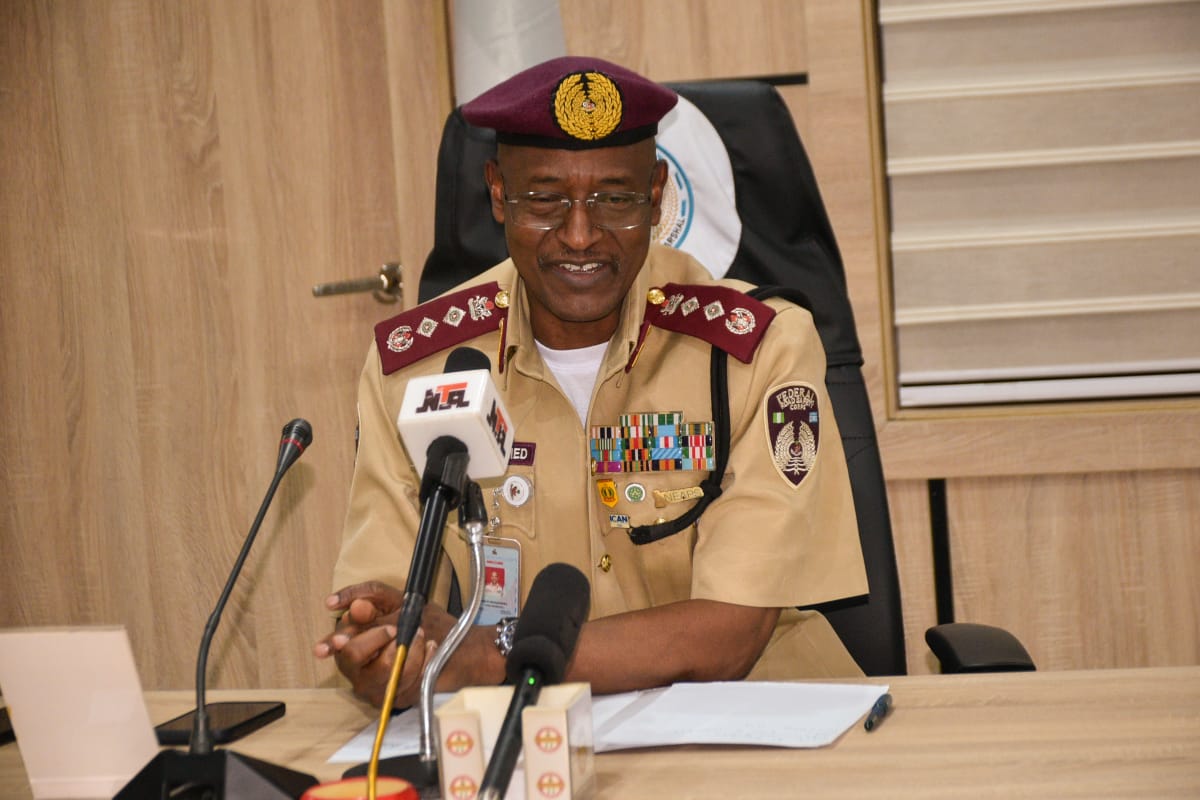







Barely three years after opening its doors to students, the African Aviation and Aerospace University (AAAU), Abuja, is steadily carving a niche as Nigeria’s ambitious answer to Africa’s aviation manpower deficit. In this interview with the Newsflash212 team, the acting vice-chancellor of the university, Dr. Mustapha Sheikh Abdullahi said the AAAU will address africa aviation aging workforce and position Nigeria as Africa’s aviation education hub. Excerpts…
Q: Can you give us a historical background on how the African Aviation and Aerospace University came into existence?
A: The idea of establishing the university dates back to 2016 during the General Assembly of the International Civil Aviation Organization (ICAO) in Montreal, Canada. There was a global consensus that the aviation industry was facing an ageing workforce and a shortage of specialized institutions focused not only on technical aviation training but also aviation management. At that time, Africa had no dedicated aviation and aerospace university. Nigeria then volunteered to host a Pan-African specialized aviation university in Abuja. Although the idea was conceived in 2016, bureaucratic processes delayed its implementation until 2022, when the Federal Ministry of Aviation and Aerospace Development engaged consultants to begin the establishment process.
Q: How did you become involved in establishing the university?
A: In 2022, 18 experts in university administration were invited to participate in a selection process. At the time, I was serving as the Registrar of Ahman Pategi University in Kwara State. By the grace of God, I emerged as the successful candidate and was appointed as the first staff member with the mandate to establish the university from scratch. There were virtually no foundational documents such as an academic brief or concept note, so we had to build everything from the ground up.

Q: When did the university receive official approval?
A: The final approval came on May 7, 2023, when the Federal Executive Council approved the establishment of the university, with the approval signed by former President Muhammadu Buhari. We immediately commenced documentation with the National Universities Commission (NUC) and the Joint Admissions and Matriculation Board (JAMB).
Q: How did academic activities begin?
A: Initially, we operated from Cocos Hotel before the Nigerian Safety Investigation Bureau (NSIB) provided us with temporary office accommodation. We partnered with agencies such as the Nigerian Meteorological Agency (NiMet), the Nigerian Civil Aviation Authority (NCAA), the Nigerian Airspace Management Agency (NAMA), and the Federal Airports Authority of Nigeria (FAAN) to support our academic programmes.
We also became one of the first universities in Nigeria to receive approval from the NUC to commence both undergraduate and postgraduate programmes simultaneously.
Q: What programmes does the university currently offer?
A: At the undergraduate level, we offer:
Bachelor of Science in Aviation Business
Bachelor of Science in Meteorology
At the postgraduate level, we offer:
Master of Science in Air Transport Management
Master of Science in Air Safety Management
Master of Science in Meteorology and Climate Change Science, with specialisations in:
Agrometeorology
Aviation Meteorology
Synoptic Meteorology
Hydrometeorology.
Q: How has the university grown since inception?
A: We admitted fewer than 50 students during our first intake in 2023 despite receiving nearly 1,000 applications because we deliberately wanted to grow gradually without compromising quality. Today, our student population stands at about 311, comprising undergraduate and postgraduate students.
We also secured 225 hectares of land for our permanent campus, and within two years we have transformed what was once a forest into a rapidly developing university campus.
Q: What achievements have you recorded in professional training?
A: In late 2024, we established a Directorate of Professional Training. We trained 167 aviation professionals in our first year, and in 2025 that number increased to over 500. We expect to train thousands this year as demand continues to grow.
Q: Has the university attracted international students?
A: Yes. We currently have international students from Chad and Tanzania. We have also received interest from countries including Sierra Leone, Congo and Cameroon, although we are expanding gradually to match available infrastructure.
Q: What international partnerships has the university established?
A: We have active Memoranda of Understanding (MoUs) with several leading aviation institutions worldwide, including:
Universities in Australia
French Civil Aviation University in Toulouse, France
Civil Aviation University of China
We are also finalising an MoU with Embry-Riddle Aeronautical University in Florida, United States, regarded as the world’s leading aviation university.
Through these partnerships, some of our academic staff are already proceeding for PhD training overseas, while international experts currently support some of our programmes through online delivery.

Q: What makes AAAU unique among universities in Africa?
A: Africa has only two specialised aviation universities, including ours. We are also the only specialised aviation university in Africa that is a member of ALICANTO, the Global Aviation University Association headquartered in Montreal, Canada. This international recognition has significantly increased our visibility and attractiveness globally.
Q: What major operational challenges has the university faced?
A: Our biggest challenge has been establishing our identity as a specialised aviation university. Many people compare us with conventional universities, particularly regarding student enrolment. However, aviation education is highly regulated. Certain programmes cannot admit more than 20 students per class because aviation is a precision-driven industry where mistakes can have catastrophic consequences.
Another challenge has been infrastructure development, but we have continued to expand steadily.
Q: Where do you see the university in the next 10 years?
A: We envision AAAU becoming the global centre of excellence in aviation education and research. We want to become Africa’s leading reference point for aviation education, producing cutting-edge research that addresses industry challenges worldwide.
Q: The Minister recently challenged the university to expand into engineering and aviation law. What progress has been made?
A: We are already making significant progress. Through TETFund, we secured a ₦4 billion intervention grant to establish a Faculty of Aeronautics and Space Engineering. Construction is expected to begin shortly.
We also have an active partnership with the French Civil Aviation University, supported by Airbus, to develop our engineering programmes.
On aviation law, our Governing Council has approved the establishment of the African Institute of Air and Space Law, modelled after the renowned McGill Institute of Air and Space Law in Canada. Funding has already been secured for the institute.
Q: How affordable is the university?
A: Despite being a specialised aviation university, we are probably one of the most affordable in the world. Tuition is completely free in line with the Federal Government’s policy for public universities.
Students only pay registration and other statutory charges.
Aviation Business: ₦720,000 per academic session.
Meteorology: ₦707,000 per academic session.
These fees have remained unchanged since the university admitted its first students. Part of the charges covers internationally recognised professional certifications that students earn before graduation.
For postgraduate programmes, the initial fee was ₦1,650,000 mainly because many of our international faculty members are paid in foreign currency. This year, it added like ₦200,000 spread across one year.
Q: Finally, what is your message about the future of AAAU?

A: We remain committed to fulfilling our mandate as a specialised aviation and aerospace university. Our focus is not on rapid expansion but on producing highly skilled professionals, impactful research and internationally competitive graduates who will contribute meaningfully to the aviation industry in Nigeria, Africa and the world.